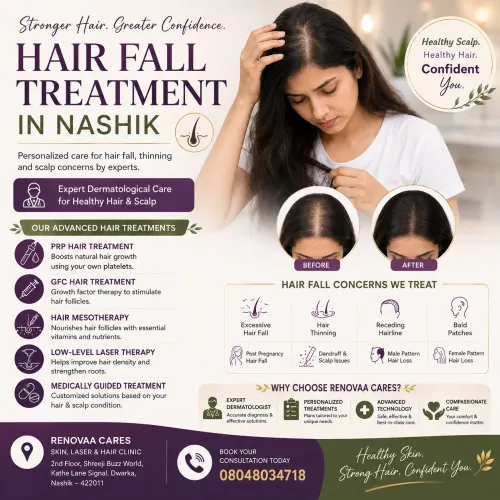

Hair fall and hair thinning are common concerns that affect both men and women. While there are many treatments available, PRP (Platelet-Rich Plasma) Hair Treatment has gained popularity as a safe, non-surgical option for improving hair growth and strengthening existing hair.
If you're looking for a natural way to manage hair loss, understanding how PRP works can help you decide whether it's the right treatment for you.
What is PRP Hair Treatment?
PRP stands for Platelet-Rich Plasma, a treatment that uses your body's own healing and growth factors to support hair follicles and encourage healthier hair growth.
Since PRP is prepared from your own blood, it is considered a natural and minimally invasive treatment option.
How Does PRP Hair Treatment Work?
The procedure is usually performed in a few simple steps:
Step 1: Blood Collection
A small amount of blood is drawn from the patient, similar to a routine blood test.
Step 2: PRP Preparation
The blood is processed to separate the platelet-rich plasma, which contains concentrated growth factors.
Step 3: PRP Application
The prepared PRP is carefully injected into areas of the scalp experiencing thinning or hair loss.
Step 4: Hair Follicle Stimulation
The growth factors help nourish hair follicles, improve scalp circulation, and support healthier hair growth.
Over time, this can help improve hair density and reduce excessive hair fall.
Benefits of PRP Hair Treatment
PRP therapy offers several advantages:
✔ Non-surgical procedure
✔ Uses your body's natural growth factors
✔ Helps reduce hair fall
✔ Supports healthier hair growth
✔ Improves hair density and thickness
✔ Minimal downtime
✔ Suitable for both men and women
Who Should Consider PRP Hair Treatment?
PRP may be beneficial for individuals who are experiencing:
Early Hair Thinning
People noticing reduced hair volume or visible scalp areas often respond well to PRP.
Excessive Hair Fall
If hair shedding is becoming more noticeable, PRP may help strengthen hair follicles.
Receding Hairline
Early intervention can help support existing hair and slow progression.
Weak or Fine Hair
PRP can improve overall hair quality and thickness.
Hair Loss Due to Stress or Lifestyle Factors
Many patients experiencing temporary hair loss may benefit from scalp stimulation and follicle support.
Who May Not Be an Ideal Candidate?
PRP may not be suitable for everyone. Individuals with certain medical conditions or advanced hair loss may require alternative treatment approaches. A consultation with a dermatologist can determine the most appropriate option.
When Can You Expect Results?
Hair growth is a gradual process. Most patients notice improvement over several months as hair follicles respond to treatment.
Results vary depending on:
- Cause of hair loss
- Severity of thinning
- Individual scalp condition
- Consistency with recommended treatment sessions
Supporting Your PRP Results
For the best outcomes, it's important to:
✔ Follow a healthy diet
✔ Stay hydrated
✔ Manage stress levels
✔ Maintain scalp hygiene
✔ Follow your dermatologist's recommendations
Healthy habits can help support stronger, healthier hair growth.
Final Thoughts
PRP Hair Treatment is a modern, natural approach to managing hair fall and improving hair density. It works by using your body's own growth factors to support healthier hair follicles and encourage regrowth.
If you're experiencing hair thinning, excessive hair fall, or early hair loss, consulting a dermatologist can help determine whether PRP Hair Treatment is the right solution for your needs.
Keywords